

While most episodes of back pain stem from benign muscular strain that resolves within a few weeks, spinal issues become medically serious the moment they involve the nervous system (spinal cord or exiting nerve roots), structural instability, or unremitting inflammation. When disc herniation, spinal stenosis, or spondylolisthesis begins compressing neural structures, delaying clinical assessment risks irreversible nerve damage, chronic neuropathic pain, or permanent motor weakness.
How Doctors Categorize Spinal Problem Severity?
Under the clinical expertise of Dr. Sameer Patil, Director and Consultant Spine Surgeon at Vencer Hospital, spinal conditions are triaged into three clinical categories:
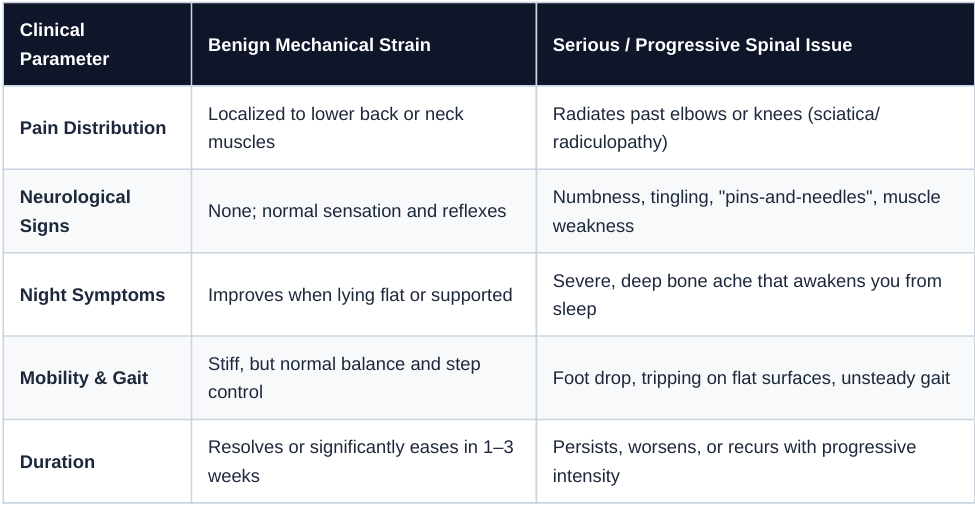
- Category 1: Mechanical & Musculoskeletal (Non-Emergency, Resolving): Sprains, minor postural strain, and acute muscle fatigue. These cause localized aching that improves with rest, ergonomic adjustments, and targeted physical therapy within 2–4 weeks.
- Category 2: Neurological Compromise (Needs Specialist Evaluation): Herniated discs, sciatica, spinal canal stenosis, and facet hypertrophy encroaching on nerve pathways. Symptoms radiate down the arms or legs, producing tingling, numbness, or reflex changes. These require formal imaging and structured
intervention to prevent axonal loss. - Category 3: Structural Instability & Surgical Emergencies (High Severity): Fractures, infections (spondylodiscitis), spinal cord tumors, or Cauda Equina Syndrome. These involve acute cord or nerve root compression and require emergency surgical decompression within 24 to 48 hours to avert permanent
paralysis.
Mechanical Strain vs. Serious Spinal Pathology
Red Flag Warning: True Spinal Emergencies
Dr. Sameer Patil emphasizes: Seek immediate emergency room care if back pain is accompanied by sudden loss of bowel or bladder control, numbness in the saddle/groin area, high fever, or rapid progression of numbness down both legs. These are signs of Cauda Equina Syndrome or epidural infection requiring
emergency decompression.
Spinal disorders are progressive biomechanical issues. Ignoring worsening symptoms can result in:
- Permanent Nerve Damage: Chronic nerve root impingement leads to nerve ischemia, causing persistent numbness or motor deficit that may not recover even after surgery.
- Cervical Myelopathy: Compression of the spinal cord in the neck causes loss of hand coordination (difficulty writing or buttoning clothes) and irreversible balance impairment.
- Neurogenic Claudication: Severe spinal stenosis restricts blood supply to leg nerves while walking, reducing comfortable walking tolerance to just a few minutes.
- Secondary Joint Degeneration: Unbalanced spinal mechanics place abnormal loads on adjacent discs and facet joints, accelerating multi-level spondylosis.
Q: How do I know if my back problem is serious?
A: A back problem is considered serious if pain radiates down your legs or arms, is accompanied by numbness or
limb weakness, wakes you up at night, lasts longer than 4 to 6 weeks, or causes difficulty with balance or bowel and
bladder function.
Q: Does a herniated or slipped disc always require surgery?
A: No. Over 85% of disc herniations heal with non-surgical management, including physical therapy, anti inflammatory medications, and epidural injections. Surgery is only considered if conservative care fails after 6–8 weeks or if progressive neurological weakness develops.
Q: Can spinal problems affect internal organs?
A: Yes. Compression of the lowest spinal nerve bundle (the cauda equina) impairs nerve signals to the bowel and bladder sphincters, causing incontinence or urinary retention—a medical emergency requiring prompt surgical release.